
In December 2024, with snow on the ground across the Prairies, 17% of past-day coffee servings in Canada were cold. That surprises most operators we talk to, and it is one of several shifts that should shape your next commercial espresso machine.
Coffee remains Canada’s most-consumed beverage, with 71% of Canadians drinking one the previous day, according to the Coffee Association of Canada’s winter 2025 study. What is changing is the cup: colder, more customized, and expected to taste the same no matter who is on shift.
Buying a commercial espresso machine in Canada also looks different west of Ontario. Prairie tap water is some of the hardest in the country, counter staff can be hard to find and keep, and many of our customers run sites where the person making coffee is also running the till, the fryer or the front desk.
This guide covers what a commercial espresso machine costs, what each cup costs once labour is counted in your province, how automatic and semi-automatic machines compare, and whether to buy or lease to own, with the Western factors layered on top. DSL is the exclusive Western Canada distributor for Franke Coffee Systems, and our technicians install and service these machines from Winnipeg to the Lower Mainland.
How Western Canada drinks its coffee
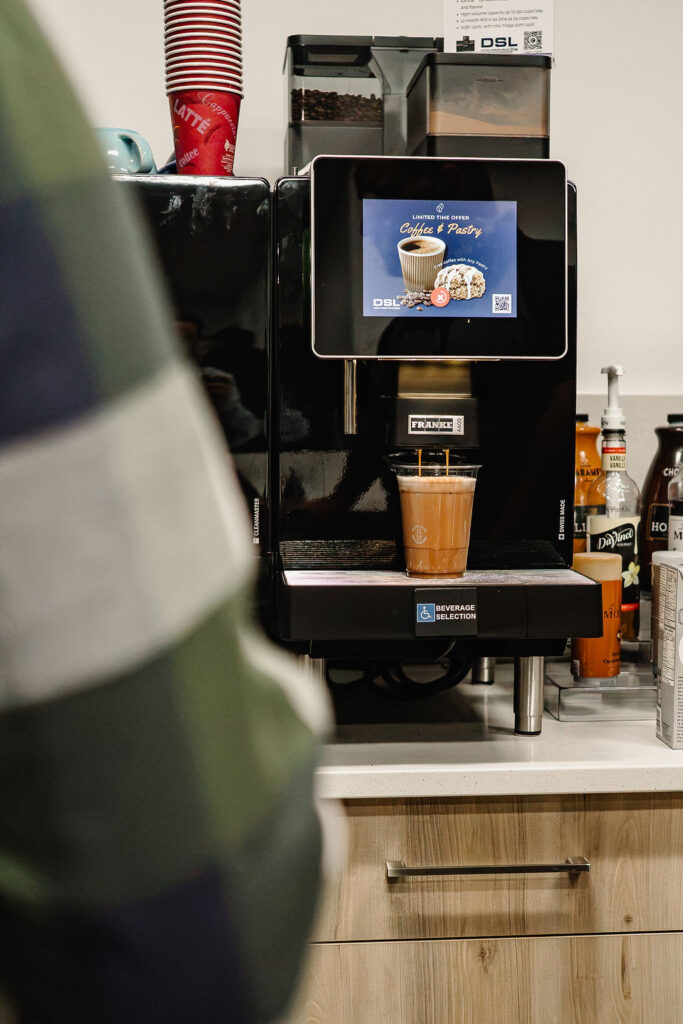
Western Canada’s coffee culture is not one scene. It is several, and each points to a different machine.
- Vancouver and the Lower Mainland. The city is often called the origin point of Canada’s third-wave coffee movement. Customers expect specialty-level espresso, and many cafés want to keep a barista on bar. The Franke S700 suits that: it automates extraction for consistent shots while staff still texture the milk.
- Calgary and Edmonton. The Coffee Association of Canada’s president has pointed to Alberta as a region where micro roasters and independent coffee houses are building a robust coffee culture. Calgary competes on the national stage, with a seven-time Canadian Barista Champion among its roastery founders. When operators pour local beans, they care how those beans taste in the cup, which is why the water section below matters so much here. A Franke A1000 with up to three grinders lets a café run a local roast beside its house blend.
- Highways, c-stores and Prairie drive-thrus. The same CAC interview describes coffee spreading beyond coffee houses into convenience and gas stations, workplaces and hotels, and shifting from a commodity to a value-added product. The A800 Fresh Brew brews each cup to order from up to three bean types, and the A1000 Flex adds milk drinks and chocolate, both with no barista needed.
- Work camps, resorts and mountain hotels. Volume swings with shifts and seasons, staff rotate often, and guests arrive expecting the drinks they order at home. The A1000’s capacity of up to 300 cups a day and two milk types cover the range.
What ties these together is rising expectations. A customer who drinks specialty coffee on the weekend now expects something close to it at the dealership, the clinic and the gas station on Monday.
Cold coffee is a year-round order, even on the Prairies
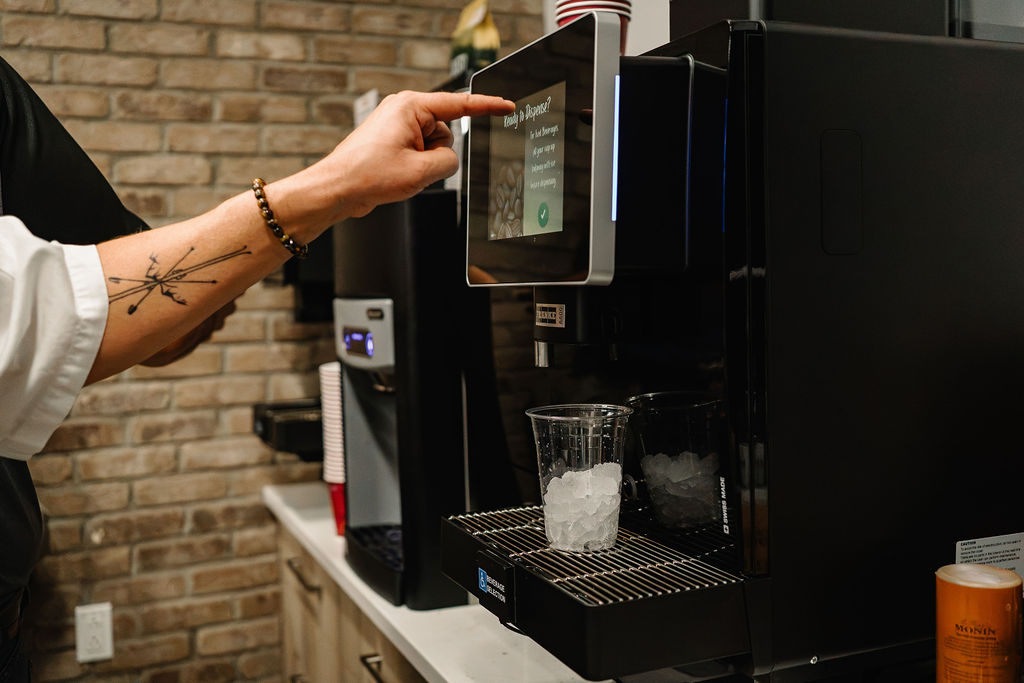
Cold is the fastest-growing part of Canadian coffee. Circana’s CREST data for the 12 months ending August 2025 put iced and cold brew at 16% of coffee servings, with frozen coffee adding another 6%. The Coffee Association of Canada reports iced and cold brew grew 13% year over year.
Younger customers are driving it: 45% of Gen Z prefer cold coffee, compared with 15% of Gen X and 9% of boomers. Cold drinks also tend to be the customized ones, and CCentral’s report lists alternative milks, flavoured syrups and lower-sugar versions among the options that same group looks for.
So the machine needs to handle cold and custom without adding steps for staff. Franke A Series machines with FoamMaster texture milk hot or cold, so an iced oat latte comes off the same unit as the morning cappuccino. The A1000 holds up to two milk types, and the A1000 Flex adds a powder system for chocolate and specialty bases. Recipes live on the touchscreen, so the drink is the same on every shift. If frozen coffee is on your menu, pair the espresso machine with a Taylor frozen beverage machine, which DSL also supplies.
Automatic vs semi-automatic commercial espresso machines in Canada
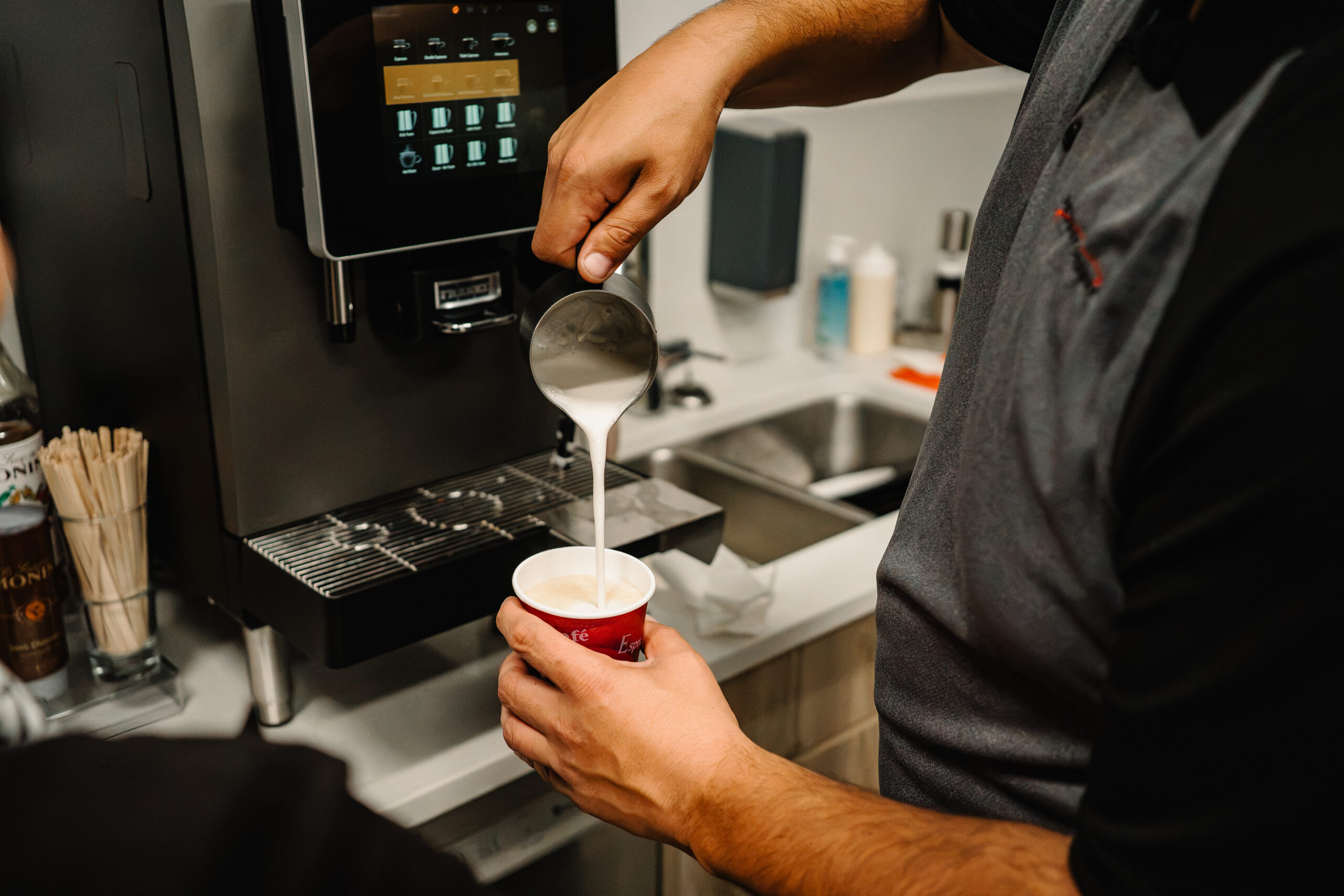
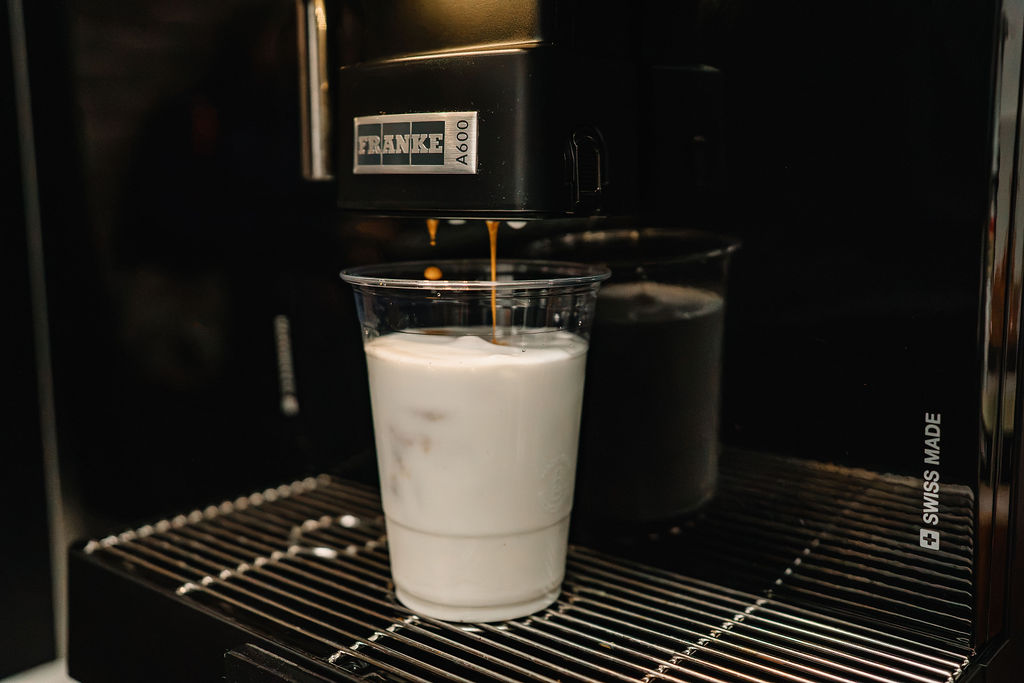
Commercial espresso machines in Canada fall into three types, and the difference is how much of each drink a person makes.
- Traditional machines leave every step to the barista: grinding, dosing, tamping, timing the shot and steaming milk. The drink is only as good as whoever is working.
- Semi-automatic machines like the Franke S700 automate the shot. The machine grinds, doses and extracts the same way every time, and staff texture the milk with help from Autosteam. It suits cafés that sell on hand-poured milk drinks but can’t count on an expert on every shift.
- Fully automatic machines, also called super-automatic or bean-to-cup, make the whole drink at the touch of a button, including hot and cold milk foam on FoamMaster models. Franke’s A400, A600 and A1000, the A1000 Flex and the A800 Fresh Brew are all fully automatic, and most can run as self-serve.
What about group heads? On a traditional machine, the group heads are the brewing stations, and one, two or three groups set how many shots can run at the same time. More groups raise the ceiling, but the real limit is staffing: one person on a two-group machine still finishes one drink at a time. Automatic and semi-automatic Franke machines don’t use group heads. They are sized by cups per day instead, which is why the lineup table further down lists capacity rather than groups. For most Western sites, the better question is how many trained people you will realistically have at your busiest time.
How much does a commercial espresso machine cost in Canada?
Price follows what the machine has to do. Four things move it most:
- Type. Fully automatic and semi-automatic machines cost more up front than an entry-level traditional machine, and earn it back in labour, as the next section shows.
- Capacity. A 100-cup-a-day A400 and a 300-cup A1000 sit far apart because of the grinders, boilers and brew units each needs.
- Milk system. FoamMaster, a second milk type and milk refrigeration add cost. A black-coffee machine like the A800 Fresh Brew skips them.
- Options. Flavour stations, powder dosing, extra bean hoppers, cup warmers and payment systems for self-serve.
The machine is only part of the installed price. Budget for water filtration matched to your site, installation and commissioning, staff training, and a preventative maintenance plan. Every DSL Franke product page has a Get Price Estimate form, and our team will quote the full installed cost for your menu and volume.
Commercial espresso machine cost per cup, with labour counted
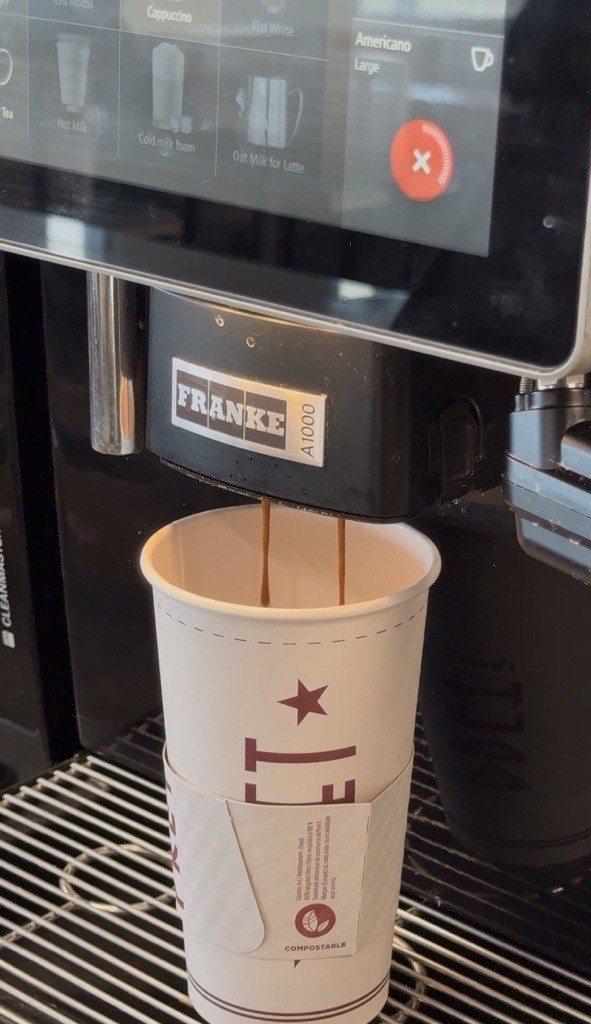
Ingredients cost about the same regardless of which machine pours the drink: the same beans, milk, cup, and lid. What changes is how long a person spends making it, and in the West that cost depends on which province you operate in.
Wage floors keep climbing in most of the region. BC’s minimum reached $18.25 in June, and Manitoba and Saskatchewan both rose on October 1. Alberta has held at $15.00 since 2018, but finding, training and keeping counter staff is hard in every province, and each departure from a traditional bar means training a new barista from scratch.
The table below uses each province’s general minimum wage and illustrative hands-on times for one milk drink: about 70 seconds on a traditional machine, about 40 seconds on a semi-automatic where the machine pulls the shot and staff steam the milk, and about 10 seconds on a fully automatic machine where staff place a cup and tap the screen.
| Province | General minimum wage | Traditional (about 70 sec) | Semi-automatic (about 40 sec) | Fully automatic (about 10 sec) |
|---|---|---|---|---|
| British Columbia | $18.25 | $0.35 | $0.20 | $0.05 |
| Manitoba | $16.40 | $0.32 | $0.18 | $0.05 |
| Saskatchewan | $15.70 | $0.31 | $0.17 | $0.04 |
| Alberta | $15.00 | $0.29 | $0.17 | $0.04 |
At 150 milk drinks a day over 360 trading days, moving from a traditional machine to a fully automatic one saves about $13,500 a year in labour in Alberta and about $16,400 in British Columbia. Moving from semi-automatic to fully automatic saves roughly half that. These figures use the wage floor, so for operators paying above minimum, which is most of them, the real savings are higher.
Daily cleaning doesn’t eat into that gain. Franke machines run their cleaning cycles automatically and prompt staff through each step, and the full routine takes about 12 to 15 minutes.
Western water is hard on espresso machines
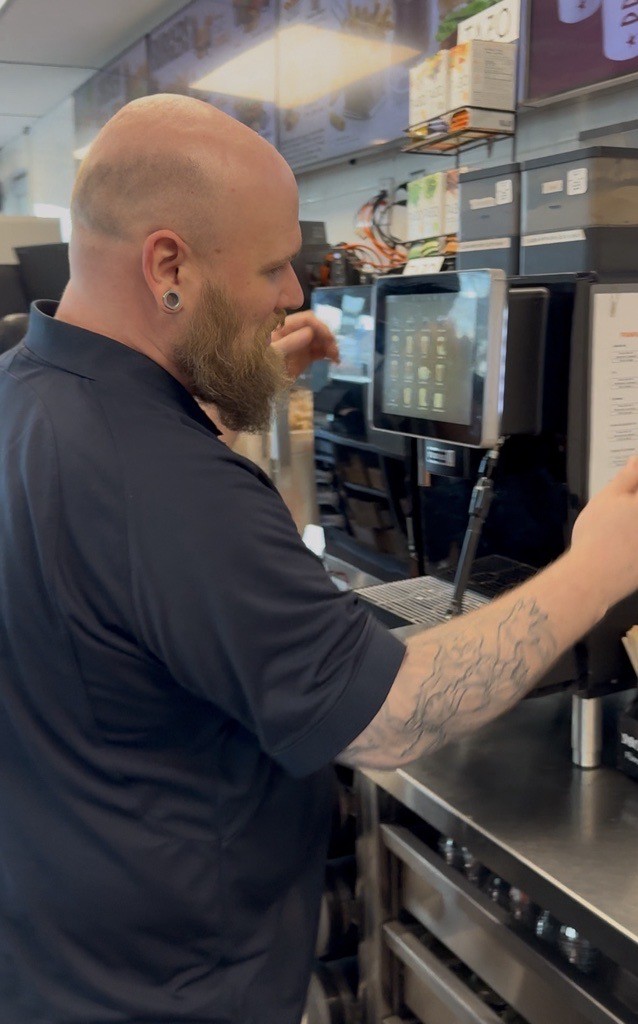
Mineral scale is what shortens most espresso machines’ lives out West, because much of the region has very hard water. Canadian drinking water guidelines class 120 to 180 mg/L as hard and 180 mg/L or more as very hard.
- Edmonton: EPCOR’s treated water ran 145 to 218 mg/L total hardness in 2024, with a median of 177.
- Calgary: 2025 averages were 174 mg/L from the Bearspaw plant serving the north and 224 mg/L from Glenmore serving the south, with the hardest water from December to February.
- Regina: hardness across the city’s distribution system averaged 203 mg/L in 2025. The backup groundwater wells the city drew on during treatment plant upgrades averaged 649 mg/L.
- Saskatoon: treated water averaged 171 mg/L in 2025.
- Winnipeg: softer than the rest of the Prairies, with treated water averaging about 82 mg/L. That still builds scale over time at espresso boiler temperatures, and filtration still protects flavour.
- Rural and well-water sites: private wells, camps and highway locations across Saskatchewan and Manitoba can run far harder than city supplies, so test at the site rather than relying on the nearest city’s numbers.
- Metro Vancouver: the opposite problem. Water is very soft, around 8 to 12 mg/L, which protects against scale but can affect extraction and needs its own treatment plan.
Treat water as part of the equipment. Filtration chosen for your site’s water at installation is cheap insurance for the boiler. We test site water before commissioning whenever an operator asks, and we strongly recommend filtration on every install. In very hard water areas like Edmonton, limescale and calcium buildup wear out internal parts much faster without it. Water also shapes flavour. A cup of coffee is almost entirely water, so the minerals coming out of the tap change how the beans taste, and the right treatment is how you get the profile you chose those beans for. Franke’s CleanMaster automates daily milk-system cleaning, and a DSL preventative maintenance plan schedules descaling around your water test and drink volume.
Matching the Franke lineup to Western Canadian operations
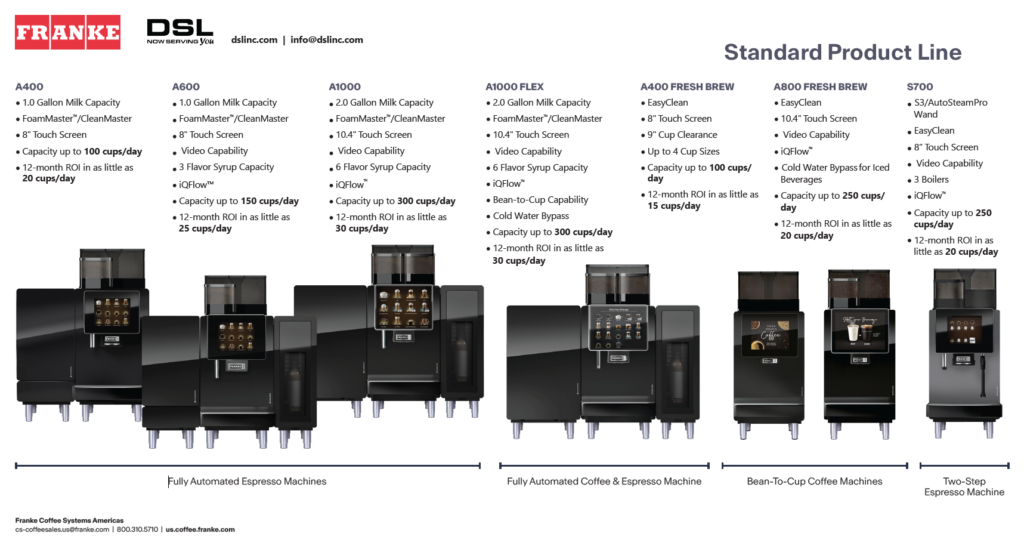
The table sorts Franke’s lineup by type and published daily capacity. Find the row that covers your busiest day with room to grow, then check what sets it apart against what you actually sell.
| Franke model | Type | Published daily capacity | What sets it apart | Good fit in Western Canada |
|---|---|---|---|---|
| A400 | Fully automatic | Up to 100 cups | Compact, with FoamMaster or milk system | Offices, clinics, dealerships, golf clubhouses |
| A600 | Fully automatic | Up to 150 cups | Flavour station for up to 3 flavours | Restaurant dining rooms, hotel breakfast service, small cafés |
| A800 Fresh Brew | Fully automatic | Up to 250 cups | Brews black coffee to order from up to 3 bean types, no milk system | Highway c-stores, travel centres, large offices, campuses |
| A1000 | Fully automatic | Up to 300 cups | Up to two milk types, up to 6 flavours, CleanMaster standard | Hospitals, work camps, resort hotels |
| A1000 Flex | Fully automatic | Up to 300 cups | Two milk types plus powder for chocolate and specialty hot & cold beverages & fresh brew system for black coffee to order | Self-serve or full-serve programs with specialty drinks |
| S700 | Semi-automatic | Up to 250 cups | Automated shots, Autosteam or Autosteam Pro for milk | Specialty cafés & restaurants with baristas on bar |
What we look at on a DSL site visit:
- Your rush. How many drinks go out in your busiest 30 minutes, not just the daily total.
- Staffed or self-serve. Whether customers will use the screen themselves.
- Your menu. Cold drinks, plant-based milk, flavours, chocolate or black coffee only.
- Your water. A hardness test and room for the right filtration.
- Power and plumbing. A dedicated circuit, a water line and a drain within reach.
- Your counter. Width, depth and clearance above for bean hoppers.
Want to try before you commit? Book a hands-on trial at one of our showrooms in Edmonton, Calgary, Winnipeg or Port Coquitlam and run your own menu on the machine.
Buy new, lease-to-own or buy used
How you pay for the machine matters almost as much as which one you choose.
- Buy new. Full manufacturer warranty, current features, and the lowest total cost if you have the capital. Best for established sites with a known volume.
- Lease-to-own. Spread the cost into monthly payments and own the machine at the end of the term, so payments come out of the margin the machine earns from its first month. DSL now offers lease-to-own through our leasing partner, Flow Funding. See leasing and financing for details.
- Certified used. Used equipment is a lower-cost way into a coffee program. Buy from a supplier who has inspected, refurbished, or serviced the machine, since one that ran on untreated Prairie water can look fine on the outside and still have scaled-up internals.
- What about renting? DSL doesn’t rent machines. If a low up-front cost is the goal, lease-to-own gets you there, and you own the machine at the end.
Lease-to-own with Flow Funding at a glance:
- Terms from 12 to 60 months
- Seasonal and deferred payment options, a good fit for patios, golf courses and other seasonal sites
- Available to start-ups and established businesses
- Options for all credit types
- Any equipment from $1,500
Whichever route you take, installation, training and service work the same way.
Where to buy a commercial espresso machine in Western Canada
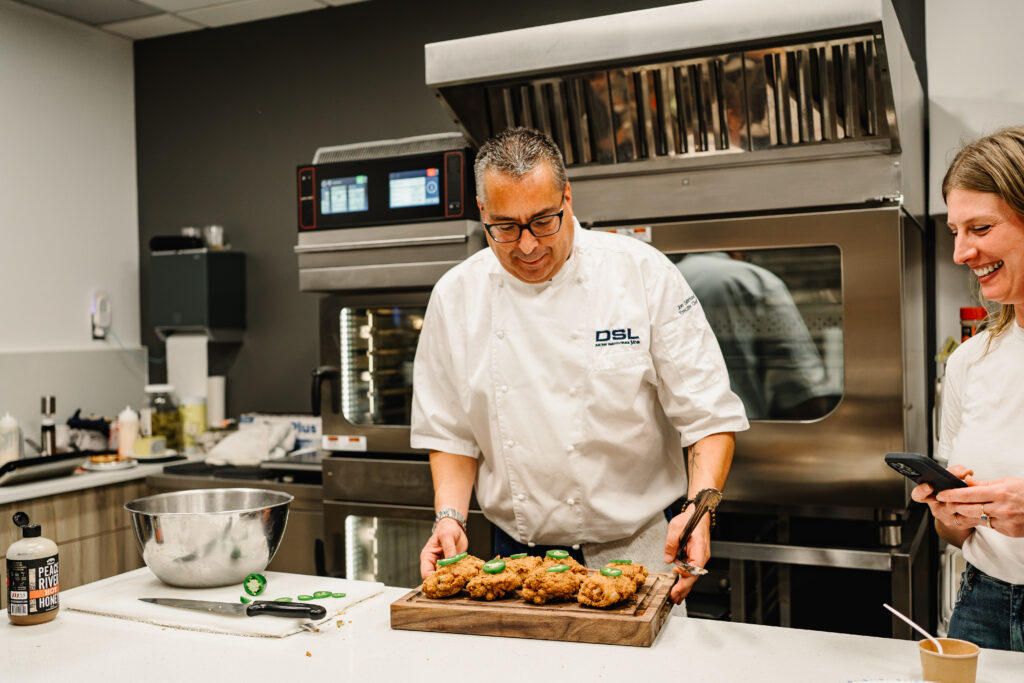
DSL has served Western Canadian foodservice since 1916. We are family-owned and family-run, with headquarters in Edmonton and branches in Calgary, Port Coquitlam and Winnipeg.
As the exclusive Western Canada distributor for Franke Coffee Systems, we handle the whole life of the machine: site assessment, water treatment, installation, staff training, OEM parts and consumables, preventative maintenance, and 24/7 reactive service when something goes down mid-service.
Tell us what you serve and how busy your rush gets, and we will match you to a Franke model, quote it installed, and set up lease-to-own if you want it. Browse our Franke coffee equipment or contact our team to start the conversation.
Commercial espresso machine FAQ for Western Canada
Where can I buy a commercial espresso machine in Canada? It depends on where you operate. In Alberta, British Columbia, Saskatchewan and Manitoba, DSL is the exclusive Franke Coffee Systems distributor. In Ontario and Atlantic Canada, our sister company TFI Food Equipment Solutions supplies and services Franke equipment.
Where can I buy a commercial espresso machine in Western Canada? DSL supplies, installs and services Franke super-automatic and semi-automatic espresso machines anywhere in Western Canada. We have showrooms in Edmonton, Calgary, Port Coquitlam and Winnipeg for hands-on trials.
Do I need water treatment for an espresso machine in Edmonton, Calgary, Regina, Saskatoon or Winnipeg? Yes. Edmonton, Calgary, Regina and Saskatoon water regularly tests in the hard to very hard range, and Winnipeg’s softer water still leaves deposits over time. Either way, minerals build up in boilers and valves. The right filtration depends on what your own tap water tests at.
Can a commercial espresso machine make iced coffee? Yes. Franke A Series machines with FoamMaster produce cold milk foam and can build iced espresso drinks from the same unit. Frozen, blended coffee needs a separate frozen beverage machine.
How long does it take to clean a super-automatic espresso machine? About 12 to 15 minutes. Franke machines run their cleaning cycles automatically and prompt staff through each step, so no specialized training is needed.
What is the best espresso machine for a small café in Western Canada? It comes down to who is behind the counter. A café built around trained baristas gets the most from the semi-automatic S700, which locks in the shot and leaves the milk steaming work to staff. A café where one or two people handle everything is usually better served by a fully automatic A600, rated for up to 150 cups a day.
What is the difference between automatic and semi-automatic commercial espresso machines? A fully automatic machine makes the whole drink, including the milk, with one touch. A semi-automatic machine automates the shot and leaves milk steaming to staff. Fully automatic machines save the most labour; semi-automatic machines keep a barista’s hand in the drink.
How much does a commercial espresso machine cost in Canada? It depends on type, capacity, milk system and options, plus installation, water treatment and training. DSL quotes the full installed cost for your site, and lease-to-own through Flow Funding spreads it into monthly payments.
Can I lease to own a commercial espresso machine? Yes. DSL offers lease-to-own through Flow Funding, so you make monthly payments and own the machine at the end of the term. Terms run 12 to 60 months, with seasonal and deferred payment options, and start-ups and all credit types can apply.
Do commercial espresso machines need group heads? Only traditional machines use group heads. Franke’s automatic and semi-automatic machines are rated by cups per day instead.
Who services Franke coffee machines in Western Canada? DSL’s 70+ factory-trained technicians service Franke equipment across the West, with preventative maintenance plans, All-in-one service programs and 24/7 reactive service.